To help you on the way and navigate the festival program more easily we have compiled this list of events, dates, times, and links to the specific information about each program.
Saturday May 30: Opening Main Festival Exhibition, GOUDasfalt, Gouda Start: 15.00 View programme
Sunday May 31: Listening sessions, guided tours and discussions with artists, curators, and audience, GOUDasfalt, Gouda Start: 13.00 View programme
Wednesday, June 3 to Sunday, June 21: Main festival exhibition @ GOUDasfalt, Gouda Opening hours: Wednesday – Sunday, 11.00 – 19.00 View programme
Friday June 5: Inauguration of the listening sculpture subterranean by Christine Hvidt at Tuinen van Boskoop Start: 16.00 View programme
Saturday June 6: Bodies of Water – performance and floating session, Nieuwkoop Meijepad Start: 14.00 View programme
Sunday June 7: Tales from the Swamp, Muziektent Reghthuysplein, Nieuwkoop Start: 15.00 View programme
Saturday June 13: Subterranean Dialogues #1 – Het Groene Huis, Boskoop Start: 13.00 View programme Register
Sunday June 14: Art Market Boskoop and Subterranean listening sessions, Tuinen van Boskoop Start: 12.00 View programme
Monday June 15: Subterranean Dialogues #2 – Exploring and protecting the living soil through science and art. Boomkwekerijmuseum Boskoop Start: 13.00 View programme Register
Thursday June 18: Acoustic River Ecologies Workshop: Building and Listening with EMF Microphones, Gorcums Museum, Gorinchem Start: 13.00 View programme Register
We are coming up to the final part of the Green Heart Biennale. We still have some spots available for the Acoustic River Ecologies workshop with Minji Kim on Thursday June 18 at Gorcums Museum in Gorinchem, and for our conference The Design of Regeneration on Saturday June 20, at Chocoladefabriek in Gouda.
Acoustic River Ecologies Workshop: Building and Listening with EMF Microphones – Thursday, June 18
In this workshop guided by artist and researcher Minji Kim participants assemble their own Electromagnetic Field Microphone (EMF). From the Gorkum Museum in the historical fortress town of Gorcum, we then set out to register sub-sonic phenomena at the edges of the big rivers – the highly symbolical point for The Netherlands where Maas and Waal flow together at Gorinchem.
While inaudible to human ears these subsonic vibrations we will record have a tremendous influence on the living environment in and around the rivers.
Het Gorcums Museum, Grote Markt 17, Gorinchem Thursday June 18, 13.00 – 17.00
This one-day conference on Saturday, June 20 consists of two thematic blocks: ‘Reviving River Ecologies’ and ‘Bioregional Finance & Alternatives’. The conference provides an opportunity to explore issues surrounding ecological regeneration in depth, both together and in discussion with Dutch and international specialists.
Part I: Reviving River Ecologies
10.00 – 13.00
In the morning program until lunch, we explore how ecological regeneration can be designed within sharply different contexts (geographical, political, cultural). What new perspectives can be outlined here? How to deal with the complexity of entangled ecological, economic, technological, and political systems?
The presentations focus these questions on markedly different river environments and their specific ecologies: the Dnipro riverbed in Ukraine, the quay walls of the Maas river in central Rotterdam, and the acoustic environment of the big rivers at Gorinchem, where Maas and Waal flow together. With: Svitlana Usychenko & Fulco Treffers (Dnipro Integrated Vision), Pierre Oskam, and Minji Kim.
Part II: Bioregional Finance and Alternatives
14.00 – 17.00
The afternoon program poses the question how usable and effective financial capacities can be developed to put ecological regenerative methods and principles into practice?
Issues of ‘scale’ play a major role in this: Should existing financial structures be ‘bent’ to bioregionally specific (agro-ecological) ways of working – as advocated by proponents of ‘Bioregional Finance’? Or should alternative models be developed instead, on a smaller scale, rooted in the local context and communities? More generally we want to explore how ‘ecological value’ can be expressed in terms of a shared economy for all forms of life? With: David Bollier, Natasha Hulst, Klaas Kuitenbrouwer, and Rob Lubberink.
Saturday June 20, 10.00 – 17.00 De Chocoladefabriek – Steenlandzaal Klein Amerika 20, Gouda
Main Exhibition at GOUDasfalt in Gouda
Gouderaksedijk 34, Gouda
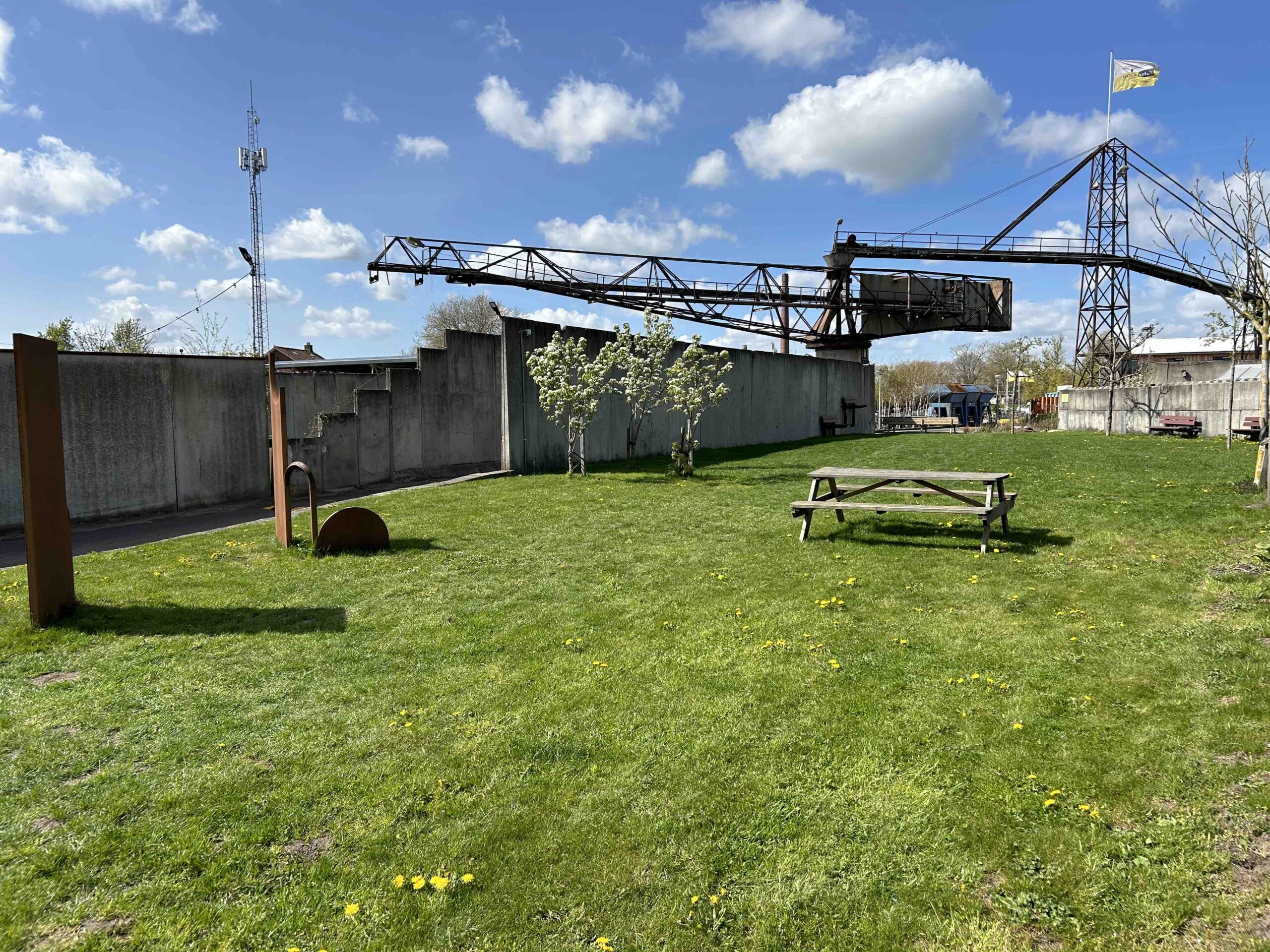
Our main exhibition will be open for the last time from Wednesday to Sunday, 11.00 to 19.00 at the impressive formerly industrial terrain of GOUDasfalt, which is itself a prime example of a citizen-lead initiative of both social en ecological regeneration.
The Exhibition features works by Eva-Maria Lopez (DE), Christine Hvidt (DK),Nicole Spit (NL), Anne Zarske (DE), Sensing Peat (Jeanna Kolesova, Juliane Tübke, Kallia Kefala, Kim Bode, Marina Naprushkina, Philipp Modersohn, Suza Husse, Turakella Editha Gyindo), Urban Reef (NL), Dnipro River Integrated Vision (Oksana Hrabchak, Svitlana Usychenko, Fulco Treffers, Lilet Breddels) (UA), Minji Kim (KR), Letizia Artioli (IT), Pawel Pokutycki (NL), Green Office & Ecosenda KABK (NL).
This one-day conference on Saturday, June 20 consists of two thematic blocks: ‘Reviving River Ecologies’ and ‘Bioregional Finance & Alternatives’. The conference provides an opportunity to explore issues surrounding ecological regeneration in depth, both together and in discussion with Dutch and international specialists.
Relationships with the societal, cultural, and political context play a prominent role in this exploration, while we are simultaneously investigating the significance of this for the creative disciplines (art and design) and the role they might potentially fulfil.
The language of the conference is English.
Conference Programme
10.00 Opening / introductions – Eric Kluitenberg (moderator)
Part I: Reviving River Ecologies
In the morning program until lunch, we explore how ecological regeneration can be designed within sharply different contexts (geographical, political, cultural). What new perspectives can be outlined here? How to deal with the complexity of entangled ecological, economic, technological, and political systems?
The presentations focus these questions on markedly different river environments and their specific ecologies: the Dnipro riverbed in Ukraine, the quay walls of the Maas river in central Rotterdam, and the acoustic environment of the big rivers at Gorinchem, where Maas and Waal flow together.
The Dnipro Integrated Vision project is a joint work of Ro3kvit, Urban Coalition for Ukraine, and Greenpeace, exploring the Dnipro River as a living system in times of fragility and transformation. How can regeneration be conceived at the scale of an entire riverbed? – in the darkest of circumstances after four years of war. The project aims to develop a vision for the Dnipro River. To show the unused potential. To create dialogue and share knowledge. To give alternatives. To inspire.
11.15 Pierre Oskam – Tidal Pools & Regenerative Design
TIJMAKERS is a pilot that investigates how existing, paved quay walls along the Nieuwe Maas can be ecologically enriched by means of modular tidal pools, made entirely of local and recycled materials. Taking this project as an example of a regenerative design intervention Oskam will expand this analysis into a more general discussion of regenerative design and issues of scale in actually delivering substantial ecological benefits.
11.45 Minji Kim – Acoustic River Ecologies – EMF listening in Gorinchem
Sound artist and researcher Minji Kim is studying massive water infrastructures and their acoustic ecologies. For our festival she has been doing field-recordings in and around the big rivers at Gorinchem, the symbolic point where Maas and Waal flow together. Kim has been recording sub-sonic phenomena using EMF microphones. These sound waves mostly produced by human activity, though inaudible to the human ear, have a tremendous influence on the living environment in and around the rivers.
12.15 Response & Discussion
13.00 Lunch break
Part II: Bioregional Finance and Alternatives
The afternoon program poses the question how usable and effective financial capacities can be developed to put ecological regenerative methods and principles into practice?
Issues of ‘scale’ play a major role in this: Should existing financial structures be ‘bent’ to bioregionally specific (agro-ecological) ways of working – as advocated by proponents of ‘Bioregional Finance’? Or should alternative models be developed instead, on a smaller scale, rooted in the local context and communities? More generally we want to explore how ‘ecological value’ can be expressed in terms of a shared economy for all forms of life?
14.00 David Bollier & Natasha Hulst – Relationalised Finance
Renown Commons theorist and activist David Bollier recently co-authored a paper with Natasha Hulst co-founder of Voedselpark Amsterdam and connected to Schumacher Action Labs and the Bioregional Weaving Labs, about alternative models of financing, rooted in local communities and economies that they refer to as ‘Relationalised Finance’.
How can such approaches provide models for more resilient local economies that also address vital ecological concerns?
14.45 Klaas Kuitenbrouwer – Value in a shared economy for all forms of life
Klaas Kuitenbrouwer is a researcher and curator at Nieuwe Instituut in Rotterdam and director of the Zoönomic Institute. He will discuss the ideas behind a new project that aims to contribute to a new way of determining ecological and economic value in a shared economy for all forms of life. How can we understand and express both economic and ecological value differently in a context of multispecies exchanges?
15.15 Respondent: Rob Lubberink
Rob Lubberink, researcher at the Centre for Economic Transformation at the Amsterdam University of Applied Sciences will respond to all three presenters in this session and draw out some issues for further discussion. This will open the floor for a broader discussion with the audience and the presenters.
The Green Heart Biennale is financially supported by: Stimuleringsfonds Creatieve Industrie, LEADER Hollandse Plassen, Province of South Holland, Municipality of Gouda, Co-financed by the European Union.
Around the coming weekend, June 13 to 15 the Green Heart Biennale will focus on Boskoop, a widely recognised centre of horticulture with a long standing tradition of growing plants, bushes, and trees. How can we relate to the soil in this environment? where is the potential for regenerative methods and approaches?
We discuss these with invited guests, scientists, artists and others, in relation to Christine Hvidt’s art and research project Subterranean.
Subterranean Dialogues #1
Het Groene Huis, Boskoop Saturday June 13, 13.00 – 16.00 Boomkwekerijmuseum, Boskoop Monday 15th June, 13.00 – 16.00 Register
Join us for a day of being with soil in this public artscience gathering!
What is soil and what lives in the soil? What are the different ways of knowing soil and how would we like to relate to it?
The Subterranean Dialogues are sessions opening up these questions through artistic attunement and scientific approaches in a poetic setting.
Join us for a listening session hosted by artist Christine Hvidt, a soil literacy experience hosted by soil biologist Giulia Bongiorno (Wageningen University & Research) followed by a shared dialogue.
For this first session we will be outdoors at the land of kwekerij Het Groene Huis.
Register:
To sign up for this event please write an email to: info@groenehartbiennale.nl This will allow us to prepare the session better.
This gathering is part of the Subterranean project at the Groene Hart Biënnale in Gouda at GOUDasfalt and in Boskoop at Tuinen van Boskoop and Kwekerij Het Groene Huis 30 May – 21 June 2026.
About Subterranean
Subterranean is an interdisciplinary art–science project combining sound art, machine learning, and ecological inquiry to explore life underground. By analysing soil soundscapes from former tree plantations in the area of Boskoop (NL), it amplifies non-human voices and experiments with new ways of relating to the vibrant soil environments. The sound sculptures listen live to the soil and analyse the sound forming a dynamic composition based on the sonic character of each particular soil ecology at the three locations. An online digital audiovisual composition allows for direct comparison of the different soil ecologies.
The project invites for listening to and relating with less accessible ecosystems in the ground through asking what does healthy soil sound like? What can listening reveal about species, biodiversity, and soil health? How might ecoacoustics combined with machine-learning deepen our knowledge and relationship with soil and offer other narratives about soil ecologies?
On Sunday, June 14, we are joining the annual Boskoop art market.
During this event, Christine Hvidt will lead listening sessions at the listening sculpture installed in the Tuinen van Boskoop public park. The sculpture is part of her art and research project Subterranean.
Exploring and protecting the living soil through science and art
In this afternoon session (13.00 – 16.00) on Monday June 15 we compare artistic and scientific explorations of the living soil and how they can contribute to protecting subterranean life, which is crucial to the survival of life aboveground. What can the complementary perspectives from the arts and the sciences contribute in their interaction to protecting and the regeneration of life in the soil?
This dialogue is organised in co-operation with the recently launched JUST ART research consortium, of which the Green Heart Biennale is a societal partner. JUST ART is a six year research project that explores questions of climate justice through artistic research. Soil Ecologies is one of the thematic areas examined as part of this extensive research project.
In Boskoop we link this research topic to Christine Hvidt’s Subterranean project. A listening sculpture is installed in the adjacent tuinen van Boskoop public park as part of Subterranean. The sculpture makes the life in the soil audible for the audience.
We enter into dialogue with artist Christine Hvidt, researchers Vasilis Kokkoris and Katja Kwastek, and invite you to join the conversation.
JUST ART: Creating Common Grounds for Climate Justice Through Artistic Research is a six year project funded by the Dutch Research Council (NWO) and led by the University of Groningen.
Bringing together artists, researchers, campaigners and communities in rural and urban regions across the Kingdom of the Netherlands, the project aims to cultivate diverse strategies of climate justice through artistic research and creative practice.
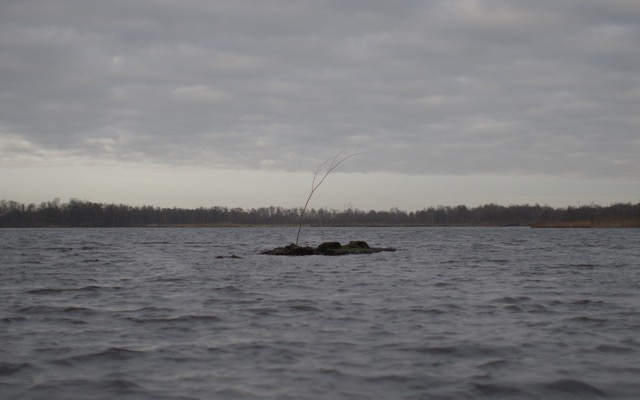
Bodies of Water – Performance, Nieuwkoopse Plassen (Meijepad), Saturday June 6, 14.00
A floating art project by Anne Zarske, with TogetherTogether
Artist Anne Zarske and art collective TogetherTogether invite audience participants to float on the Nieuwkoopse Plassen, to feel the boundaries between self, body, landscape and water dissolve. To experience the point where different ‘bodies of water’ meet..
The Nieuwkoopse Plassen is a living archive: a landscape shaped by peat extraction, flooding, and human hands, yet still moving with its own rhythms of reeds, rivers, and skies. Here, water holds memory—of bogs drained, plots carved, dikes raised, floods endured. It is both wound and lifeline, both human-made and more- than-human.
To float in these waters is to feel this history seep into the body, to sense our own fluid boundaries entangled with the shifting ground beneath. In droughts, floods, and contamination, the crises of water are written not only on the land but also within us. What happens here happens in us: porous beings caught in the same cycles of intake, exchange, and transformation.
To attune to this place is to remember: we are archives of water too—fragile, entangled, and inseparable from its fate.
Tales from the Swamp Muziektent Reghthuysplein, Nieuwkoop Start: 15.00
On Sunday afternoon (June 7) at 15.00, we take to the open air music stage at the historical Reghthuysplein, in the heart of Nieuwkoop.
In ‘Tales from the Swamp’ tale tellers from various wetlands regions in Europe meet to share myths, folklore, symbolic imaginaries, and above all, our love for the soft soil of the peatlands with each other and with the audience in Nieuwkoop.
With:
Sissel Marie Tonn (Studio Sentinel): In her work Sphagnum Time, the artist delved into the myths of bog bodies (in Denmark) and the cultural and ecological significance of peatlands.
Jan van den Helder (Historical Society Nieuwkoop) will share the mythical story of the ‘Monster of Nieuwkoop’ with us, as well as his childhood memories of the Nieuwkoopse Plassen.
Anne Zarske (Artist website) conducted extensive research in and into the Nieuwkoopse Plassen, which led to a new film and a site-specific performance, Bodies of Water, taking place on June 6 at the Meijepad.
In the lecture performance Dainėja [/dɑːˈneɪ.jɑː/]Kim Bode (Bureau of Transitioning Landscapes) and Dr. Dr. Kallia Kefala present their ongoing fieldwork exploring presences emerging from the wetland’s acoustic and ecological memory. Through their research, they reveal how the bog records disturbances and stories beyond conventional perception. (Presented as part of the extensive artistic research project Sensing Peat)
Location
Muziektent Reghthuysplei Nieuwkoop Sunday June 7, 15.00 hrs.
On Saturday, May 30, at 15.00, the main exhibition of the Green Heart Biennale opens at GOUDasfalt, the extensive bottom-up creative hub on the Hollandse IJssel, directly opposite the historic city center of Gouda.
The Green Heart Biennale is a new international, regional, and local festival of art and design for ecological regeneration, focused on the Green Heart region. It explores how art, design, and citizen initiatives can contribute to the restoration and improvement of the local living environment for all forms of life.
The official opening of the first edition of the festival will be performed by Thierry van Vugt, Alderman for Culture, Heritage, and Monuments at the Municipality of Gouda. The exhibition brings together local and international eco-regenerative art and design projects that align with the festival’s four main themes: Swamp Imaginaries, The Underground, Arboreal, and Under Water.
During guided tours for the public, attending artists and designers will discuss their work and the underlying ideas. Featuring, among others: Eva-Maria Lopez, Christine Hvidt, Nicole Spit, Lilet Breddels, Oksana Hrabchak, Letizia Artioli, Pawel Pokutycki, Green Office, and curators Eric Kluitenberg and Tania Goryucheva.
On Sunday afternoon, May 31, starting at 13.00, Christine Hvidt will lead listening sessions with the public at her sculpture Subterranean, a listening sculpture made from discarded tree stumps that makes life in the soil audible.
That afternoon, we will engage in conversation with the attending artists, designers, special guests, and the public.
The exhibition is then freely accessible from Wednesday to Sunday from 11.00 to 19.00, and runs through Sunday, June 21.
Themes and Artists
Around the theme Swamp Imaginaries, Anne Zarske conducted artistic research in and into the Nieuwkoopse Plassen. This resulted in a new film, and a site-specific performance, Bodies of Water, taking place in the area on June 6. The international art and research project Sensing Peat juxtaposes this with its explorations of wetlands in various parts of the world.
Christine Hvidt is installing listening sculptures built with discarded tree stumps at GOUDasfalt and simultaneously at Tuinen van Boskoop and Het Groene Huis in Boskoop. Her project Subterranean makes the sounds of the living soil audible. In listening sessions, the artist guides the public through sonic explorations of the life beneath our feet, part of the theme The Underground.
Christine Hvidt, Subterranean (sketch), 2026
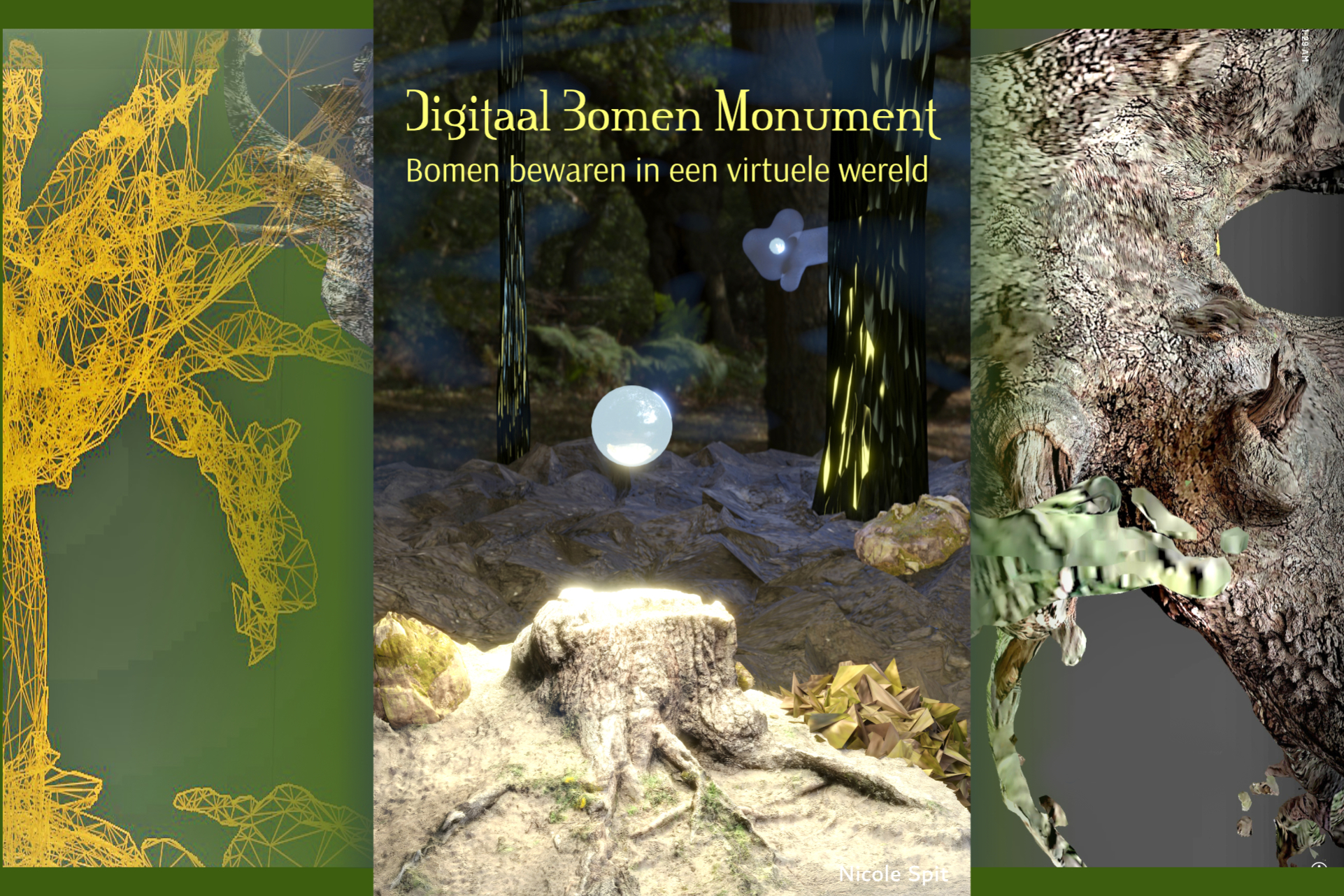
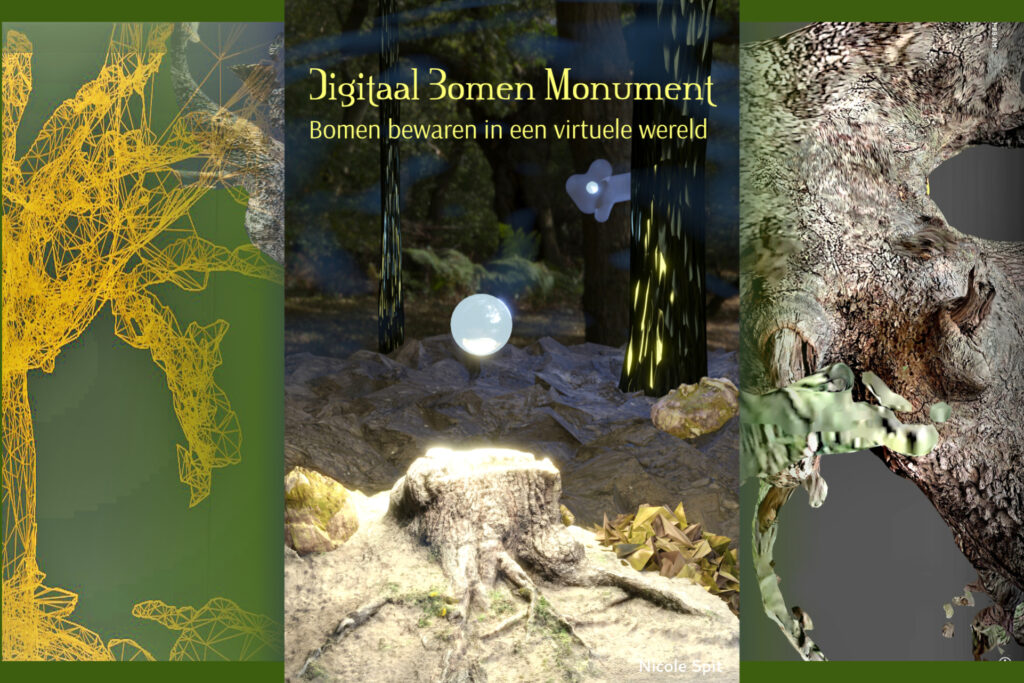
Nicole Spit presents 3D scans of monumental trees and stories from residents of Gouda about what they mean to them, part of the theme Arboreal, in the Digital Tree Monument – a model to preserve these special trees in a virtual environment.
For Under Water, Minji Kim is conducting research into the acoustic landscape of the major rivers near Gorinchem. Using self-built EMF microphones, she makes sound waves audible that lie below the human hearing limit. These vibrations, often caused by large ships and machinery, have a strong impact on life in and along the rivers. In her workshop on June 18 in Gorinchem, she teaches participants how to build these microphones themselves and conduct their own sound research.
The Dnipro Integrated Vision project developed extensive scenarios for the Dnipro River basin in Ukraine, which became a frozen front in the war following the destruction of the Kakhovska Dam. How can the regeneration of an entire region be conceived, eagerly looking forward to the end of this terrible conflict?
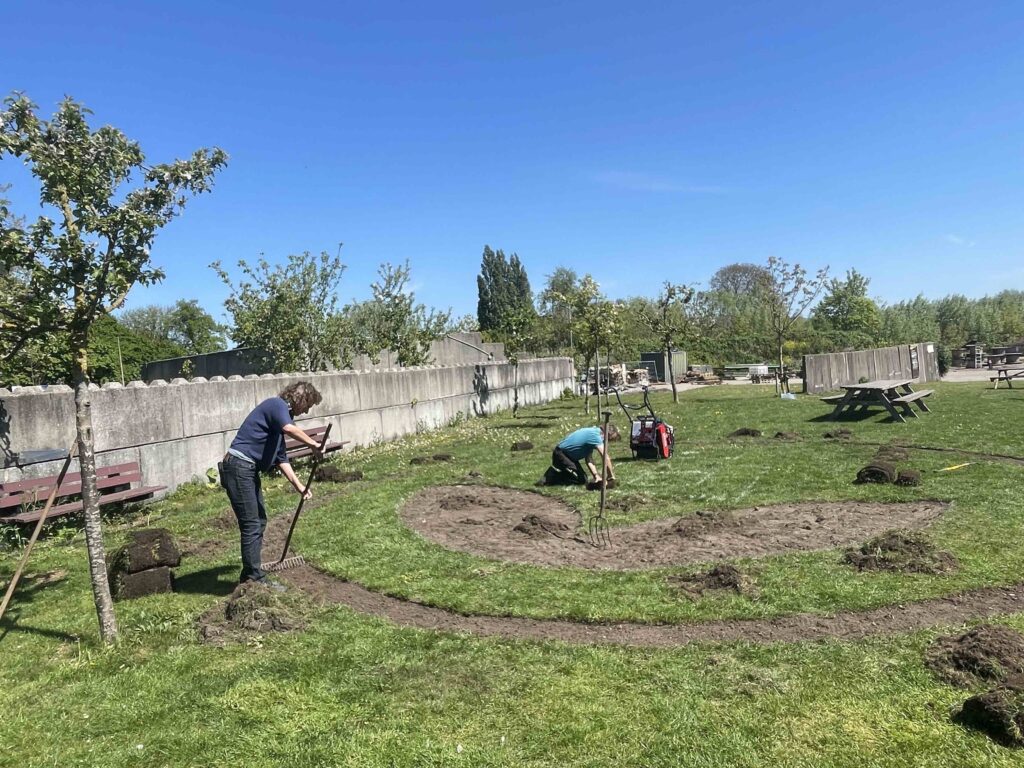
With the eco-activist land art project and ornamental garden we.resist / I never promised you a green garden, Eva Maria Lopez draws attention to the problems associated with the use of herbicides against plants considered weeds in agriculture and horticulture.
Eva Maria Lopez seeding “I never promised you a green garden”
Urban Reef presents the result of a new method for 3D printing sculptural elements using clay, which provide a favourable habitat for diverse life forms, plants, insects, and other creatures.
The Green Office of the KABK in The Hague and EcoSenda, a European educational project, demonstrate how ecological and regenerative principles can be integrated into art education.
During the weekends a small ferry will be in operation, operated by volunteers from 12.00 till 18.00. The ferry leaves from the stop Nieuwe Veerstal (see map below).
Following the opening weekend in Gouda, local public programs will take place over consecutive weekends at various locations in the Groene Hart: June 6 and 7 in Nieuwkoop and the Nieuwkoopse Plassen, June 13 and 14 in Boskoop, June 18 in Gorinchem, and finally on June 20 and 21 in Gouda.
The Green Heart Biennale is organised by Terrestris, the new platform for eco-regenerative culture, in collaboration with an extensive network of regional and (inter)national partners. The aim is to organise the festival every two years in the Green Heart region.
Our special gratitude goes out to the GOUDasfalt team, Wouter Enderink, Hans Wijnsema, Erik Rietveld, and the volunteers for their support in realising the exhibition and the festival.
The Green Heart Biennale is financially supported by:
Stimuleringsfonds Creatieve Industrie, LEADER Hollandse Plassen, Province of South Holland, Municipality of Gouda, Co-financed by the European Union.
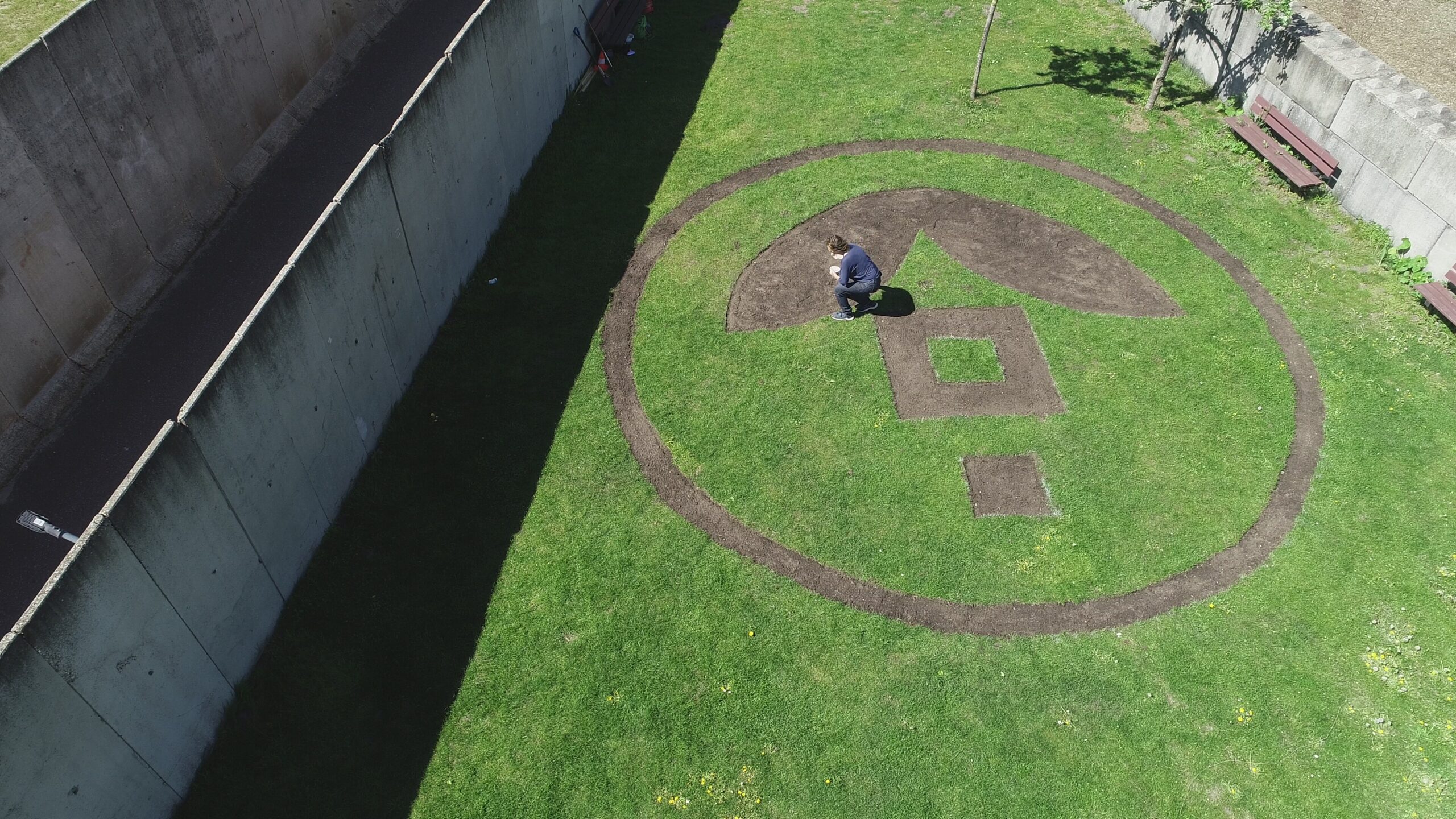
Artist Eva-Maria Lopez visited GOUDasfalt to seed her ornamental garden and artistic research project ‘we resist.’ The project is part of the central exhibition of the Green Heart Biennale at GOUDasfalt, the extensive bottom-up creative hub on the Hollandse IJssel, directly opposite of Gouda’s historic city center.
For ‘we resist.’ plant species have been included that have become herbicide resistant. Their adaptation is a naturally occurring process, following Charles Darwin’s evolutionary theory, and the spontaneous change of their genetic make-up enables them to survive. As a result of monocultures and herbicide treatment, the number of such resistant plants is increasing worldwide. Most of them have important cultural symbolic values as well as medical virtues.
In this beautiful drone video (made by Erik Rietveld) Lopez can be seen at work seeding the plants in the Mandala she created out of logo elements of the world’s most important glyphosate producers.
Create 3D scans of monumental trees in Gouda and a custom sculpture print.
Workshop at Garenspinnerij, Saturday, May 9, 12:00–16:00.
Terrestris, platform for eco-regenerative culture, and artist Nicole Spit invite interested parties to participate in the Digital Tree Monument project, which is being realised and exhibited as part of the Groene Hart Biennial 2026 and can be seen at GOUDasfalt from May 30 to June 21.
The Digital Tree Monument is an art project by Nicole Spit in which characteristic trees are digitised and placed in a virtual dream world. She does this using special software for digital 3D scanning and image editing.
Trees can disappear due to mortality or felling. Unfortunately, we cannot restore trees like stone monuments. How could we preserve our important, old, characteristic, and monumental trees? Could we perhaps preserve trees by digitally capturing them in Virtual Reality? What would it mean and how would it feel?
Join Nicole’s workshop and learn how the digital scanning software and method work. You can try it out yourself and participate creatively in making the monument of the chosen tree, and then also create your own sculpture print of a characteristic part of the tree. With your scan you can become part of the art project.
For whom: Adults and children aged 12 and up (accompanied by an adult) When: May 9, 12:00-16:00 Where: Cultuurhuis Garenspinnerij (Ceramics Room 0.16) Turfsingel 34, Gouda
Participation is free – but please register in advance!
New festival of art and design for ecological regeneration
From May 30 to June 21 2026, the first edition of the Green Heart Biennale will take place, a new festival of art and design for ecological regeneration focused on the Green Heart region in The Netherlands. The Green Heart Biennale is simultaneously international, local, and regional. The festival explores how art, design, and citizen initiatives can contribute to the restoration and improvement of the local living environment for all forms of life.
This first edition consists of local public programs organised over four consecutive weekends at various locations in the Green Heart: Nieuwkoop and the Nieuwkoopse Plassen, Boskoop, Gouda, and Gorinchem. Four ‘seedling projects’ featuring international artists are specially developed for these locations and actively involve local cultural organisations and initiatives as well as the local population.
The program includes presentations by artists, designers, researchers, ecological initiatives, practical workshops, public discussions and educational programs, and explorations of the surrounding area. Throughout the entire festival period (May 30 to June 21), the central exhibition can be seen in Gouda at GOUDasfalt, the extensive bottom-up creative hub on the Hollandse IJssel, directly opposite the city’s historic center.
The exhibition brings together local and international eco-regenerative art and design projects around the four main themes of the festival: Swamp Imaginaries, The Underground, Arboreal and Under Water.
Participating artists and designers include: Christine Hvidt (DK) Minji Kim (KR), Eva-Maria Lopez (DE), Pierre Oskam (NL), Sensing Peat (DE), Nicole Spit (NL), Sissel Marie Tonn (DK/NL), Urban Reef (NL), Anne Zarske (DE).
Organisation
The Green Heart Biennale is organised by Terrestris, the new platform for eco-regenerative culture, in collaboration with an extensive network of regional and (inter)national partners. The aim is to organise the festival every two years in the Green Heart region.